

Posture Is Not a Shape: Ribs, Pelvis & How Breath Organizes the Body
Posture is often treated as something you hold.
Stand straight. Pull the shoulders back. Engage the core.
But posture is not a position. It’s a pressure system.
When that system is balanced, the body feels light and supported.
When it’s not, posture becomes effortful, even when it looks “correct.”
The Body Is Designed to Manage Pressure
Inside the torso, posture is supported by intra-abdominal pressure.
This pressure is created by the coordinated relationship between:
• the diaphragm
• the ribcage
• the abdominal wall
• the pelvic floor
When these structures work together, the spine is supported from within rather than held upright by muscular tension.
This internal support is what allows the body to stand, sit, and move without strain.

What Happens During a Functional Inhale
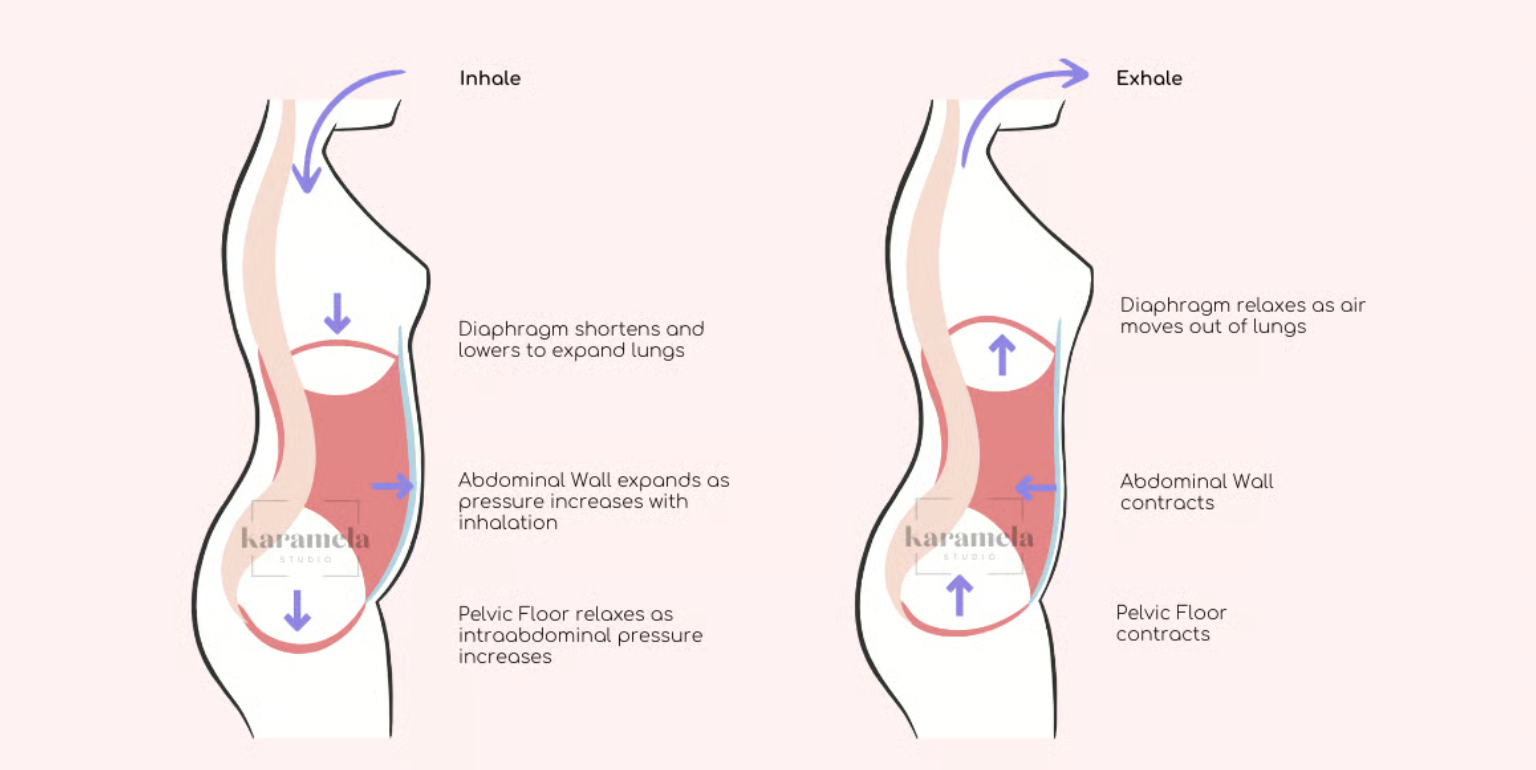
In diaphragmatic breathing, an inhale does not lift the chest upward.
Instead, the diaphragm descends, and the ribcage expands in multiple directions:
• backwards
• sideways
• gently forward
At the same time:
• The abdominal wall allows a small, natural expansion
• The pelvic floor lengthens and descends in response to the change in pressure
Nothing is forced. Nothing is exaggerated.
This expansion creates space and distributes pressure evenly through the trunk.

What Happens During a Functional Exhale
As you exhale:
• the diaphragm ascends
• the ribcage gently draws inward
• the abdominal wall recoils
• the pelvic floor responds by lifting and contracting
This coordinated response regulates pressure and provides support for the spine.
This continuous cycle — expansion on the inhale, gentle recoil on the exhale — is the foundation of functional diaphragmatic breathing.
When the System Loses Coordination
When breath and pressure are no longer well coordinated, the body adapts.
This often shows up as:
• rib flare
• shoulders pulling back in an attempt to “stand tall”
• stiffness or compensation in the lower back
• shallow breathing that stays high in the chest
• exaggerated belly breathing that pushes the abdominal wall outward
• a pelvic floor that is hypotonic (under-responsive) or hypertonic (over-responsive)
These patterns are not faults. They are strategies the body uses to manage pressure when coordination is reduced.
Why Forcing Posture Rarely Works
Trying to correct posture from the outside — pulling the ribs down, bracing the core, holding the chest open — often increases tension.
Without proper pressure management, alignment becomes something that must be maintained through effort rather than something that emerges naturally.
This is why posture cues alone rarely create lasting change.

When to Seek Support
If you consistently notice:
• pronounced rib flare
• signs of a hypotonic or hypertonic pelvic floor
• leaking or a sense of pressure when sneezing, laughing, or jumping
• persistent stiffness or discomfort in the lower back
Working with a pelvic floor specialist can be very helpful.
Pelvic floor specialists are trained to assess breathing patterns, pressure management, and the coordination between the diaphragm, abdominal wall, and pelvic floor — particularly in everyday life, not just during exercise.
Support is not about fixing the body. It’s about restoring cooperation between systems that are designed to work together.
Posture as Presence, Not Performance
Good posture is not about appearing upright.
It’s about the body being supported from the inside.
When breath, pressure, and alignment work together, posture becomes quiet and unforced — something you feel rather than something you perform.
At Studio SM, we design for bodies that move, breathe, and organise themselves naturally.
Structure should support presence, not fight it.

Written by Essem Dauletqazi


Leave a comment
This site is protected by hCaptcha and the hCaptcha Privacy Policy and Terms of Service apply.