

Article: Why We Always Finish Practice With Breathing
Why We Always Finish Practice With Breathing
Movement opens the body.
Breathing integrates it.
Most people end their practice when the muscles feel warm or stretched. The body feels worked, so the session feels complete. But internally, the nervous system is often still activated — alert, stimulated, unfinished.
This is why the final minutes of breathing are not optional. They are what turn movement into practice.
Movement Activates. Breath Organises.
Any form of physical practice — yoga, strength training, walking — increases stimulation. Heart rate rises. Sensation increases. Attention moves outward.
Breathing does the opposite.
Conscious breathing brings the system back toward balance. It organizes the nervous system, settles the breath, and allows the body to register what just happened.
Without this phase, the benefits of movement remain mostly physical. With it, they become embodied.

Why Ending With Breath Matters
When you finish practice abruptly, the body stays slightly “on.” This can show up as:
• restlessness after training
• difficulty fully relaxing
• shallow breathing later in the day
Finishing with breathing creates a clear transition — from effort to ease, from movement to stillness.
This transition is where the body learns.
A Closing Breathing Practice
You don’t need long sequences or complex techniques. What matters is rhythm, attention, and comfort.
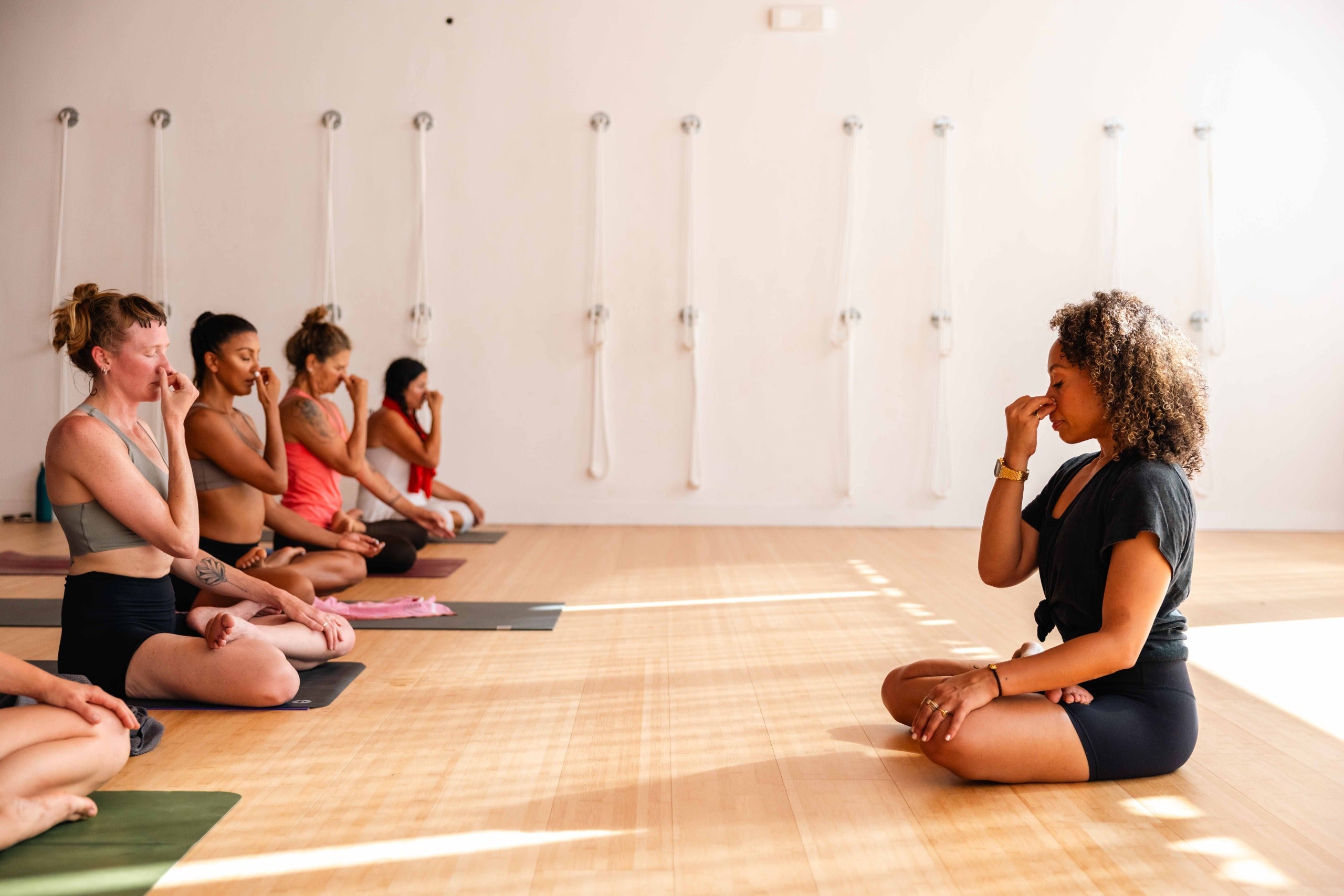
One simple way to close practice is alternating nostril breathing. It creates balance and signals completion.
How to practice
1. Sit comfortably, with the spine upright but relaxed
2. Let the shoulders soften and the jaw unclench
3. Bring one hand toward the face
Begin on the left side:
4. Gently close the right nostril
5. Inhale slowly through the left nostril
6. Close the left nostril and exhale through the right
7. Repeat this cycle five times
Switch sides:
8. Inhale through the right nostril
9. Exhale through the left
10. Repeat this cycle five times
To finish:
11. Release the hand
12. Breathe naturally through both nostrils for five slow breaths
Keep the breath smooth and unforced. There is no need to make it deep or dramatic. Let it remain quiet and steady.

What This Breathing Does
Alternating the breath between nostrils helps balance activation and calm. It gives the nervous system a clear signal that the effort phase is complete.
The final breaths through both nostrils allow the body to settle without direction or control.
This is not about performance. It’s about integration.
From Practice to Life
The way you finish practice often mirrors the way you move through your day.
Rushing through endings creates tension.
Allowing space creates presence.
This is why practice doesn’t stop when movement stops. It continues in how you transition, how you change clothes, how you slow down, how you arrive back into stillness.
At Studio Essem we design for bodies that move and for the moments when they don’t.

Written by Essem Dauletqazi

Leave a comment
This site is protected by hCaptcha and the hCaptcha Privacy Policy and Terms of Service apply.